
History of Donegal
Through the Ages
Donegal's Story
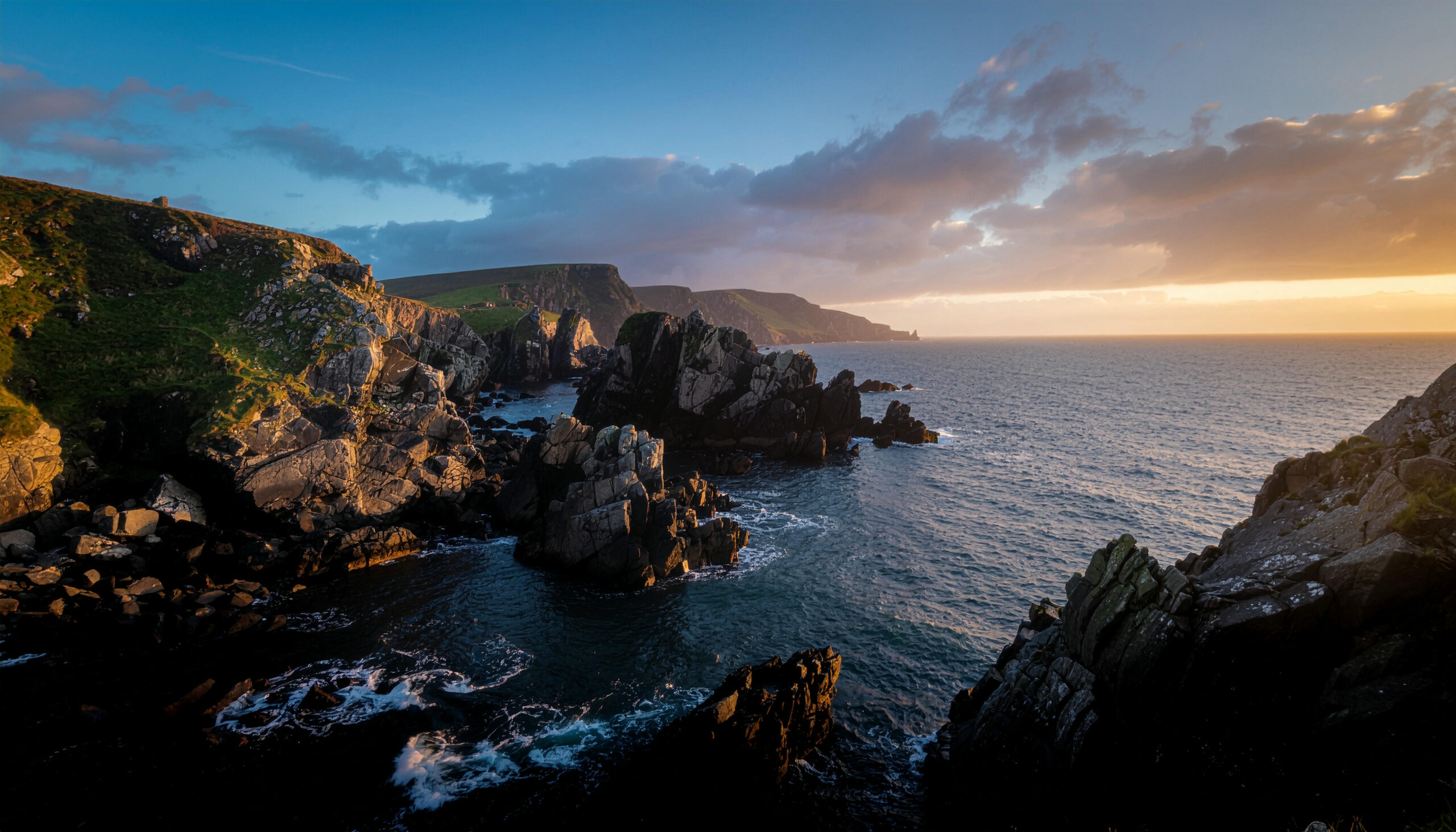
County Donegal — known in Irish as Dún na nGall meaning “Fort of the Foreigners” — has one of the most storied histories of any county in Ireland. From prehistoric stone circles to Viking raids, from Gaelic chieftains to the Ulster Plantation, every hill and headland carries centuries of memory.
c. 3000 BC — PREHISTORIC
Megalithic Donegal
Donegal was inhabited as far back as the Stone Age. The Grianán of Aileach — a magnificent stone ringfort on an 800ft hilltop — dates from around 1700 BC and served as the royal seat of the O’Neill dynasty for centuries. Portal tombs and standing stones dot the Donegal landscape, silent witnesses to ancient rituals.
c. 521 AD — EARLY CHRISTIAN
St. Columba & the Monks
Donegal’s most famous son, St. Columba (Colmcille), was born in Gartan in 521 AD. He founded the great monastery of Derry and later sailed to Iona in Scotland, spreading Christianity across northern Britain. His legacy is still celebrated across Donegal today in the Colmcille Heritage Centre in Gartan.
795 – 1014 AD — VIKING AGE
Viking Raiders & Settlers
Norse Vikings raided Donegal’s coastline from the late 8th century, plundering monasteries and establishing coastal settlements. The name “Bundoran” itself is thought to derive from Old Norse. Many of Donegal’s coastal place names carry Viking influence, evidence of centuries of Norse presence along the Wild Atlantic.
1200 – 1600 — GAELIC CHIEFTAINS
The O'Donnell Dynasty
For centuries, Donegal was the heartland of the O’Donnell clan, one of Ireland’s most powerful Gaelic dynasties. They built Donegal Castle in 1474, established the Franciscan friary, and compiled the Annals of the Four Masters — a monumental chronicle of Irish history — right here in Donegal Town.
1607 — TURNING POINT
The Flight of the Earls
In September 1607, Rory O’Donnell, Hugh O’Neill, and nearly 100 Gaelic nobles sailed from Rathmullan on Lough Swilly, never to return. This “Flight of the Earls” marked the end of Gaelic Ireland and opened the door to the Ulster Plantation — the settlement of Donegal and Ulster with English and Scottish colonists that still shapes the region today.
1845 – 1852 — THE GREAT FAMINE
Famine & Emigration
The Great Famine devastated Donegal, one of Ireland’s poorest counties. Hundreds of thousands emigrated — to America, Australia, and Britain — forever reshaping the county’s population and culture. The Donegal diaspora remains enormous: millions of people worldwide trace their roots to this rugged county.
TODAY — THE GAELTACHT
Living Irish Language & Culture
Donegal is home to one of Ireland’s largest Irish-speaking Gaeltacht regions. The unique Ulster Irish dialect spoken here is distinct from the rest of Ireland. Traditional music, weaving, and storytelling remain living traditions — not museum pieces — making Donegal one of the most authentically Irish counties in the country.
Did You Know?
Donegal is the most northerly county in Ireland — even more northerly than Northern Ireland. It’s surrounded by the Atlantic on three sides and shares a long land border with Northern Ireland.
Key Historical Sites
Donegal Castle
Built 1474 by Red Hugh O'Donnell, Donegal Town
Grianán of Aileach
Stone ringfort, c. 1700 BC, Inishowen
Rathmullan Pier
Site of the Flight of the Earls, 1607
Annals of Four Masters
Written in Donegal Friary, 1632–1636
Colmcille Heritage Centre
Gartan, birthplace of St. Columba, 521 AD
“Explore the history in person — stay in the heart of Donegal.”